Everything is Expensive, Yet We Own Nothing
Everything is a subscription; we own nothing.
Hey, y’all!
Before I get to today’s blog, I want to thank those of you who have read this far. It’s been a while, a few decades, since I took my journalism classes. Like an old machine, or my knees, my writing will need a bit of oil to really get going.
I welcome all comments, questions, and feedback at blog at samury dot com or hit me up on BlueSky.
If you like what you read, consider subscribing. I’m only human, and my lizard brain loves numbers going up.
Read until the end for a totally normal turn-based combat.
Even at four in the morning, Houston’s oppressive humidity sticks to your skin, but the line around Vinal Edge in the Houston Heights already wrapped around the block. Like an idiot, I thought getting in line four hours before the start of Record Store Day would put me in a favorable spot. People lined up the night before; Vinal Edge was yet to close.
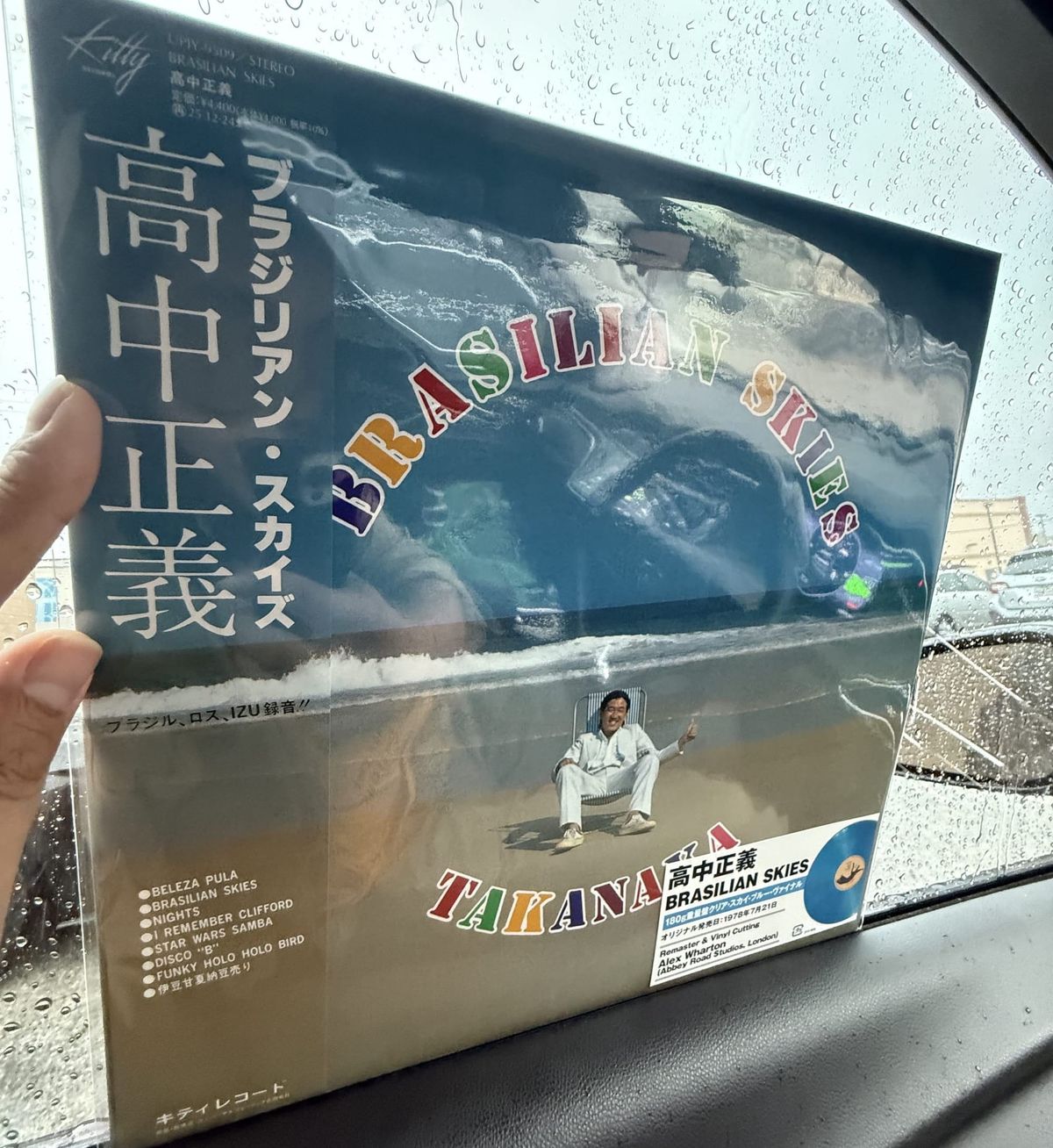
I grew anxious. I wanted to records, reprints of Masayoshi Takanaka. No one but the employees knew how many records they had allocated. At least a hundred people stood in front of me. What if they snatched up all the Takanaka albums? I didn’t wake up early on a Saturday morning to be disappointed.
Spoiler alert: the warm sounds of Masayoshi Takanaka filled my room like the midday sun later that day, and it wasn’t from Apple Music, which had the album streaming since last year.
With alt text!
— Tom O (@vgtomo.bsky.social) July 1, 2026 at 8:49 AM
[image or embed]
There is an inherent magic in physical media. You hold people’s creativity, struggles, and triumphs in your hands. Authors craft their prose, musicians play and mix their songs to perfection, and game developers work and test their games until exhaustion. Which is why Sony’s announcement that it will stop printing physical disks for games hit fans quite hard, which it dropped amidst the torrent of bad gaming news of price hikes and layoffs.
Lurching towards an all-digital future, the decision to stop releasing physical media was not a surprise, but another nail in a coffin already welded shut. As an indie game enjoyed, I own almost no physical copies of my favorite games. They sit in a nebulous cloud on a server Valve owns. Games like Fortnite and Roblox are services, so you cannot print them on disks. With patches and updates, games for your PS5 are not complete games, but a key to let you play them on your console.
But unlike fully digital games, you can sell or give those keys to someone else.
As of writing this blog, Obsession, one of the top-grossing movies of 2026, is on sale for $20 digitally and $25 for the 4K version. However, if you buy the Blu-ray for $22, you can get a physical copy and a download code. But the digital copy doesn’t take up space, so companies have more incentive to sell them. That companies save money on digital only is a lie.
Everything is a subscription; we own nothing.
Sony is taking this away from us
— ~garry~ (@garrykerls.bsky.social) July 1, 2026 at 9:26 AM
[image or embed]
If your knees creak like mine, you’ve sat in your friend’s car and flipped through their CD wallet. Those pages tell you about your friend as much as a journal would. Through the curation of media, we form our own tastes and personalities. And through that, we build community. Algorithms and a digital-only future aim to flatten taste and further extract more money from us. By surrounding ourselves with the media we enjoy, we build a sense of self. When Elliot showed ET his room, it was his way of saying, “This is me. This is who I am.” Streaming services rob us of that. Algorithms replaced sharing and discovery. And when you find something you like, companies can easily take it away.
I wouldn’t have read Neal Stephenson’s Snow Crash if a friend hadn’t left a copy in my car. Serendipitous moments like this will not exist when physical media is gone.
Companies do this to control their intellectual property and their bottom line, but they do so at the risk of culture. The audience owns media as much as the author does. Without an audience, there is no book, movie, song, or game. Media is culture, and we share culture. Art makes life worth living, and we cannot let big companies control this.
— shy's video folder (@shyvideos.bsky.social) July 2, 2026 at 5:21 PM